


MSE PRO Sodium Nickel Iron Manganese Oxide Electrode Sheet 10 cm x 10 cm (5 pieces)
Couldn't load pickup availability

Still have questions? Ask our experts!
MSE PRO Sodium Nickel Iron Manganese Oxide Electrode Sheet 10 cm x 10 cm (5 pieces)
Introduction
This product is a nickel–iron–manganese sodium oxide cathode sheet developed for sodium-ion battery research. Based on layered oxide chemistry, it is designed for use as a positive electrode material in coin cells or pouch cells. The sheet is single-side coated and available in calendered or final-calendered versions, each packaged in sets of five pieces. Calendering optimizes electrode density and mechanical integrity, which is important for consistent electrochemical testing. The material supports standard active mass and capacity calculations using coating surface density and active material ratio, as outlined by the supplier. Common applications include evaluating specific capacity, rate performance, and cycling stability in sodium-ion systems. Proper storage under vacuum or double-sealed conditions is recommended to prevent degradation, especially for high-nickel or sodium-based cathodes. This product is intended for R&D use in battery materials laboratories.
Specifications
| Parameter | Specification |
| Current collector areal density (mg/cm²) | 3.3 |
| Electrode size | 10*10 |
| Current collector thickness (μm) | 12 (aluminum foil) |
| Active material ratio | 95.50% |
| Compatible electrode type for full cells (N/P ratio) | None (Customization available upon request) |
| Compact density (g/cc) | 2.00–2.50 (Compaction value not provided for unrolled electrode sheets; calculate yourself) |
| Active material | Sodium Nickel-Iron-Manganese Oxide |
| Shelf life | Six months (vacuum sealed storage), use within one month of opening |
| Recommended electrolyte | KLD-NC06 |
| Active material specific capacity (mAh/g) | 127 (2.00–4.00V) |
| Test conditions | At room temperature (25°C), stand for 4 hours, charge at 0.1C (constant current) to 4.00V, charge at 4.00V at constant voltage to 0.02C, stand for 3 minutes, discharge at 0.1C (constant current) to 2.00V, stand for 3 minutes |
| Areal capacity (mAh/cm²) | 0.97 |
| Coating areal density (mg/cm²) | 8.0 (tolerance ±2.0%) |
| Usage recommendations | 1. If the electrode sheet is not rolled, it generally needs to be rolled before punching and baking (the compaction density can be referred to the minimum value in the Compaction Density column of this table);2. Baking conditions: 85–105°C for 4 hours (if vacuum baking, air exchange is required twice);3. The mass of active material needs to be determined according to the actual weighing result of each small disc. |
*This product must be tested in accordance with the recommended test methods and electrolytes to achieve the corresponding performance. Since the test method and electrolyte have a great influence on the performance of the battery, any change in the test method or electrolyte may reduce the performance of the pole piece; be sure to check this information before purchasing.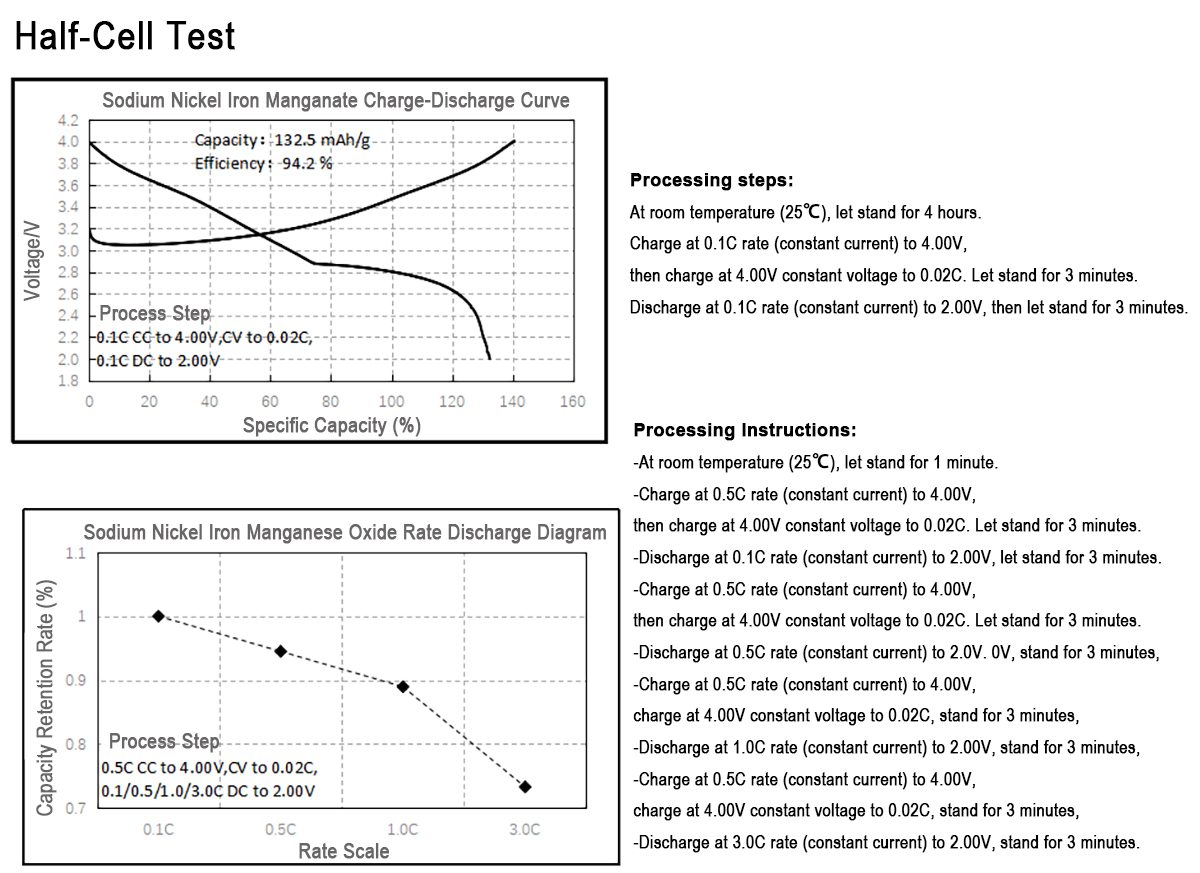
Packaging, Transportation, and Storage
1. Vacuum storage or double-sealed packaging in a glove box, especially for high-nickel and sodium cathode materials. Improper storage can increase battery internal resistance.
2. Electrodes not rolled: Roll the electrodes according to the recommended compaction density.
3. Coating surface density must be determined based on actual weighing results. Coating surface density does not include the current collector.
4. Actual weighing calculation of active material mass (mg): = (Small disc weight mg - Current collector surface density mg/cm² * Small disc area cm²) * Active material ratio
5. Theoretical active material amount (mg): = Coating surface density mg/cm² * Active material ratio * Small disc area cm²
6. Theoretical surface capacity mAh/cm²: = Coating surface density mg/cm² * Active material ratio * Granular capacity mAh/g ÷ 1000
7. When calculating granular capacity, calculate based on the actual weighed amount of active material. Due to tolerances in coating surface density, the actual weighing shall prevail.
8. Creases: Single-sided electrodes are prone to curling after rolling. Flattening and packaging may cause creases.
*Please note that the photo is for reference only. The dimensions of this product can be customized. Please contact us with any specific customization requirements.